Tariffs, market access, the dollar, defense guarantees, energy. If you don’t have it, you build it.
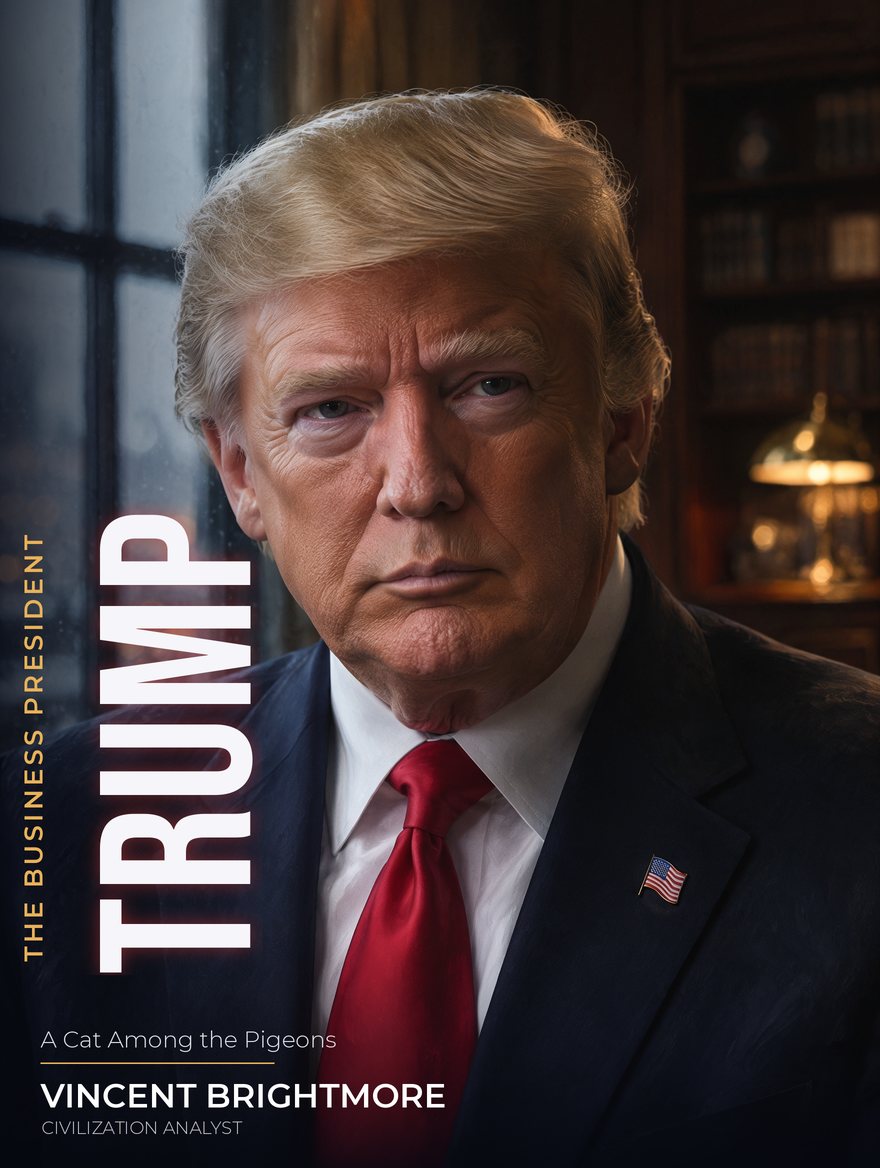
What 50 years of building companies taught me about Trump’s “chaos”
The Business President
A Cat Among the Pigeons
It is not chaos. It is an order: leverage first, then trade, then America First, military last.
I put on my glasses. Not rose-tinted, not dark. Reading glasses, the kind you use for a balance sheet. I have watched America all my life, not as a dream but as a mirror held up to Europe.
In business, leverage comes first. If you have it, you negotiate. If you don't, you build it. A country is no different, and without money and trade there is no money for anything else: not for welfare, not for defense, not for ideology.
This book tests that order chapter by chapter. Where it holds, I say so. Where it breaks, I say that too. And every time I ask the question every board asks: whose balance sheet got better?
Also in Swedish.
The order
Leverage. Trade. America First. Military last.
Read through a businessman’s glasses, twenty-one months of headlines line up. The book tests the order in every chapter — and shows where it broke.
Use the lever for deals, pledges and cash flow. Without money, there is no room for ideology.
Factories home, jobs, industry, ownership stakes. Capital meant to earn a return.
The backstop and the threat, rarely the goal. Where it became the goal, the bill came in.
Inside the book
Four parts, twenty chapters
Every chapter ends with the jab, the strongest case against it, the author’s own position — and a Leverage Ledger.
- PART IThe InheritanceWhat the new CEO found on the books
- 1The Balance Sheet They Never Show You
- 2A Cat Among the Pigeons
- 3The Tweet Is the Term Sheet
- 4DOGE: Stop the Bleeding
- PART IIThe Turnaround ToolboxTariffs, factories, ownership and money
- 5Tariffs: Cash Flow and Leverage
- 6Bringing the Factories Home
- 7The State as Shareholder
- 8Money, Gold and the Dollar
- PART IIIThe MapAllies, rivals and the deals in between
- 9Ukraine: From Charity to Contract
- 10Greenland: Close the Window
- 11Diego Garcia
- 12Europe Pays
- 13China: The Deal
- 14Oil, Venezuela and Iran
- 15The Peace President?
- 16The Map: Control Points
- PART IVWhat Comes NextFollowing the money, and ten years of scenarios
- 17Following the Money
- 182026–2036: Scenarios
- 19Without Money, No Room for Ideology
- 20Conclusion: The Test of Consequences
From the Introduction
A moon landing in four years
His four years are a moon landing — not in time, but in scale.
A turnaround CEO knows he has about eighteen months before the board loses patience, and a president's board meets at the midterms. Everything not started by November 2026 may never start at all. That is why 2026 moved on so many fronts at once: tariffs, Greenland, Iran, Panama, China, the Fed, ownership stakes.
It was not chaos. It was a deadline. If I were in his chair, I would have done the same — set everything in motion, so it is begun.
The test comes later: what keeps flying when the man who launched it is gone.
The ledger
Every chapter ends with a Leverage Ledger
Six lines, the same for every move. The conclusion adds them up: where pressure became an asset, where it was spent, and whose balance sheet grew faster than the country’s.
- Leverage
- What he used.
- The ask
- What he wanted.
- The deal
- What came out of it.
- The price
- What it cost, and who paid.
- Level
- Trade, America First or military.
- Whose balance sheet got better
- The country’s, the family’s, or someone else’s.
The jabs
One sharp sentence per chapter
Each one is followed by the strongest case against it. Credit where the record earns it. Debit where it doesn’t.
A tweet can open a negotiation. It cannot close one.
Chapter 3 · The Tweet Is the Term SheetTariffs worked best as a crowbar and worst as a cash register, and the crowbar belonged to Congress all along.
Chapter 5 · TariffsThe factories are coming home as capital, not as crowds.
Chapter 6 · Bringing the Factories HomeTrump threatened to buy the house and settled for the keys.
Chapter 10 · GreenlandTrump told Europe to pay its share, and Europe did — with borrowed money. Be careful what you invoice for.
Chapter 12 · Europe PaysOnly the moves turned into treaties, stakes and other countries’ decisions are on the balance sheet. The rest are options that expire with the man.
Chapter 16 · The MapWithout money there is no room for ideology, but without trust there is no room for money either.
Chapter 19Strong at closing deals, weak at running them — that is the verdict at halftime, and the second half has not been played.
Conclusion
Get the book
Straight from the author
Choose your language and format. No middleman.
About the author
Vincent Brightmore
Civilization analyst and pattern essayist. Entrepreneur for 50 years. Still building. A Swede who has followed America all his life — not as a utopia, as a perspective on Europe — and who reads a presidency the way a board reads a turnaround.
No party, no side. The same test for every president: judge by consequences, not intentions.
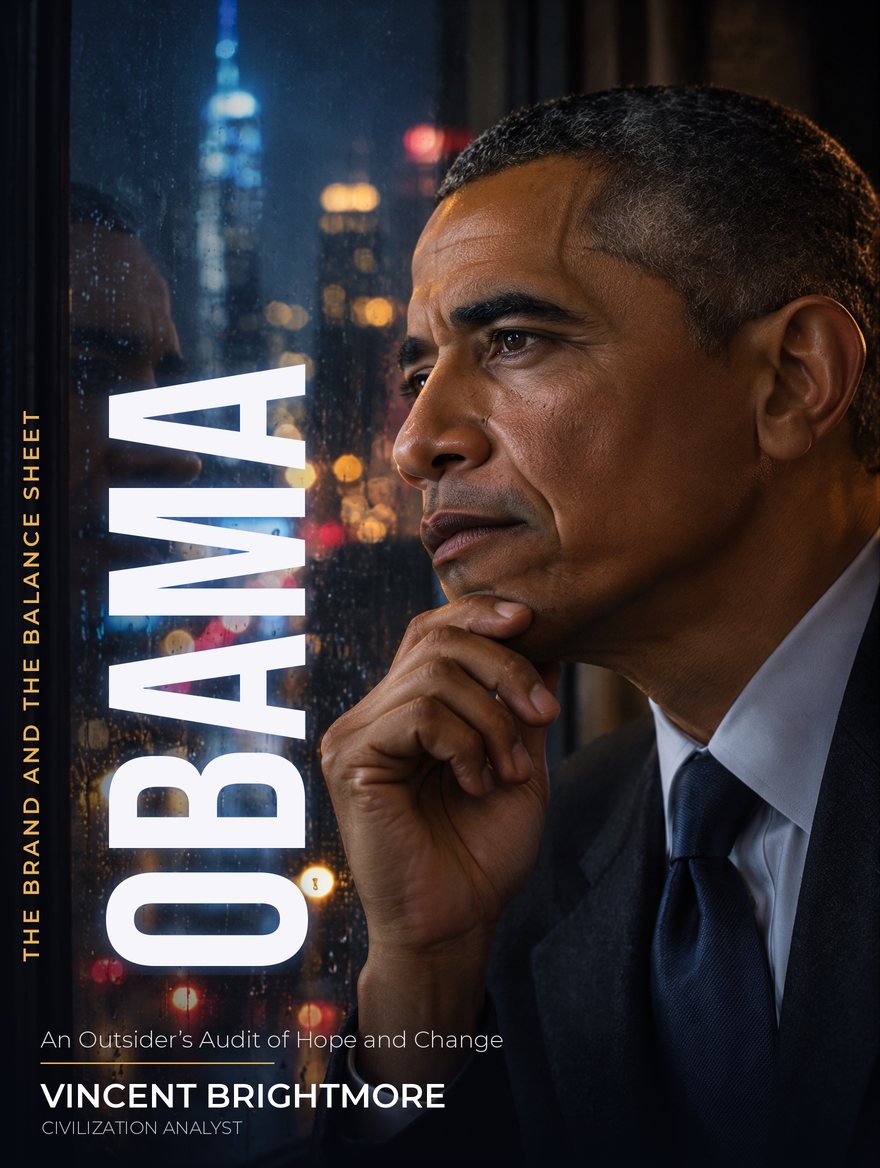 The companion volumeObama — The Brand and the Balance Sheet. The same method, the same tests.
Judge by consequences, not intentions.
One step at a time.